The Value of Loose Parts Learning
The Reggio Emilia approach to early childhood education emphasizes exploration, creativity, and child-led learning. One of the key elements that supports this philosophy is loose parts learning. Loose parts are open-ended materials that children can move, manipulate, and combine in countless ways. This type of play encourages curiosity, problem-solving, and collaboration, making it a powerful tool in Reggio Emilia inspired preschools.

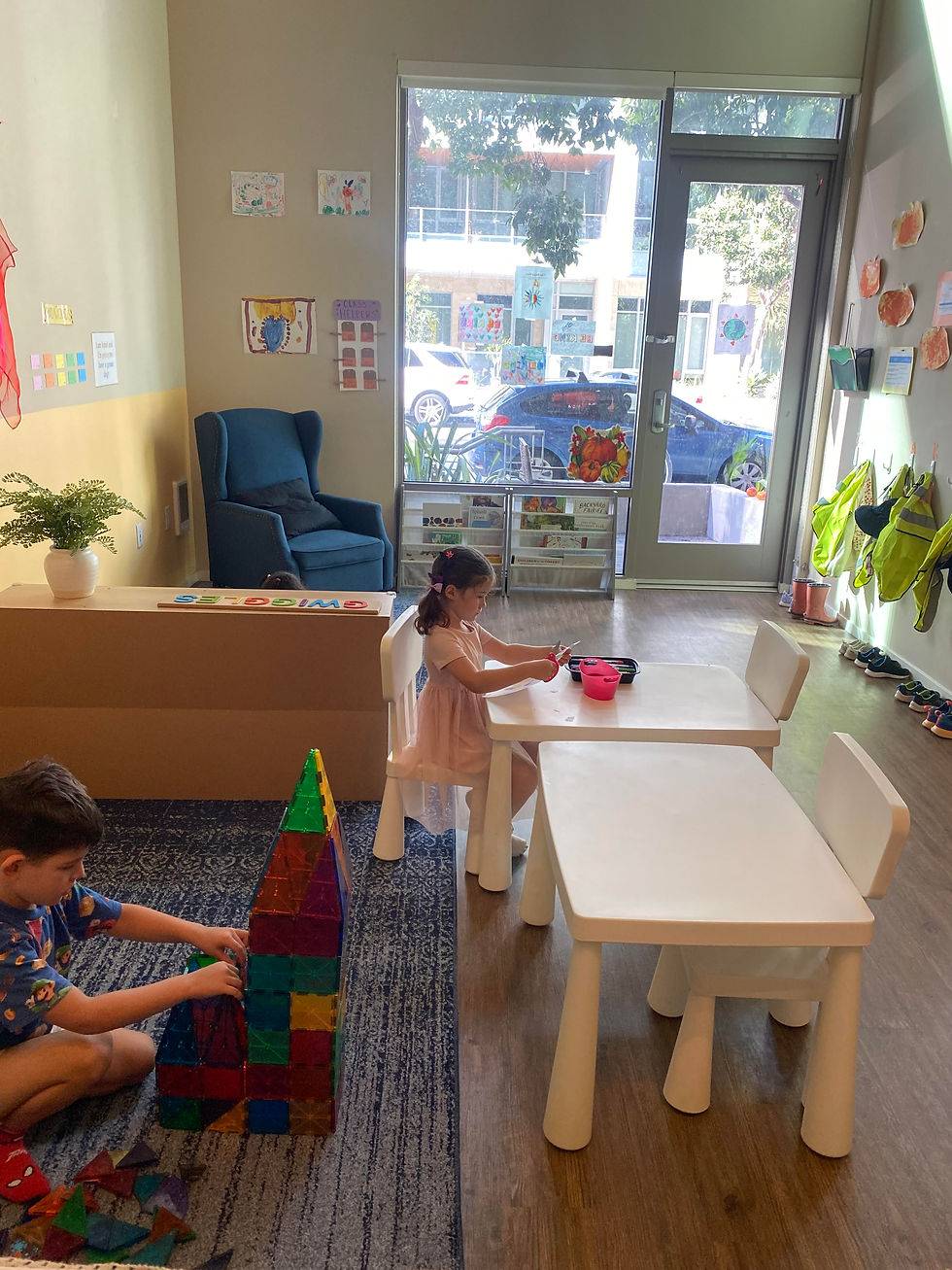
Gwiggles' loose parts area
What Are Loose Parts and Why Do They Matter?
Loose parts include everyday items such as shells, fabric scraps, blocks, buttons, and recycled materials. Unlike toys with a fixed purpose, loose parts have no set instructions or limits. This openness invites children to use their imagination and creativity to invent new ways to play and learn.
In Reggio Emilia inspired settings, educators see children as capable and resourceful. Loose parts support this view by giving children the freedom to explore ideas and express themselves. When children engage with loose parts, they develop skills in:
Critical thinking by experimenting with how parts fit or balance
Fine motor skills through handling and arranging small objects
Language as they describe their creations and share stories
Social skills by collaborating and negotiating with peers
This approach aligns with the Reggio Emilia belief that the environment acts as the "third teacher." Loose parts enrich the learning environment by offering endless possibilities for exploration and innovation.
How Loose Parts Support Learning in Reggio Emilia Preschools
Encouraging Inquiry and Exploration
Loose parts spark questions and investigations. For example, children might wonder what happens when they stack stones versus when they roll pinecones. These moments of inquiry lead to hands-on experiments and deeper understanding of physical properties like weight, texture, and balance.
Teachers observe and document these explorations, using them to guide further learning experiences. This process respects each child’s interests and pace, making learning meaningful and personalized.
Fostering Creativity and Expression
Because loose parts have no fixed use, children can transform them into anything they imagine. This freedom supports creative thinking and symbolic play, which are essential for cognitive development.
In Reggio Emilia classrooms, children’s creations are often displayed and celebrated. This recognition boosts confidence and encourages children to take pride in their ideas.
Building Social Connections
Loose parts often invite group play. Children share materials, negotiate roles, and solve problems together. These interactions build communication skills and empathy.
For example, a group might work together to build a bridge from stones. They learn to listen, compromise, and support each other’s ideas. These social experiences lay the foundation for cooperative learning and community building.

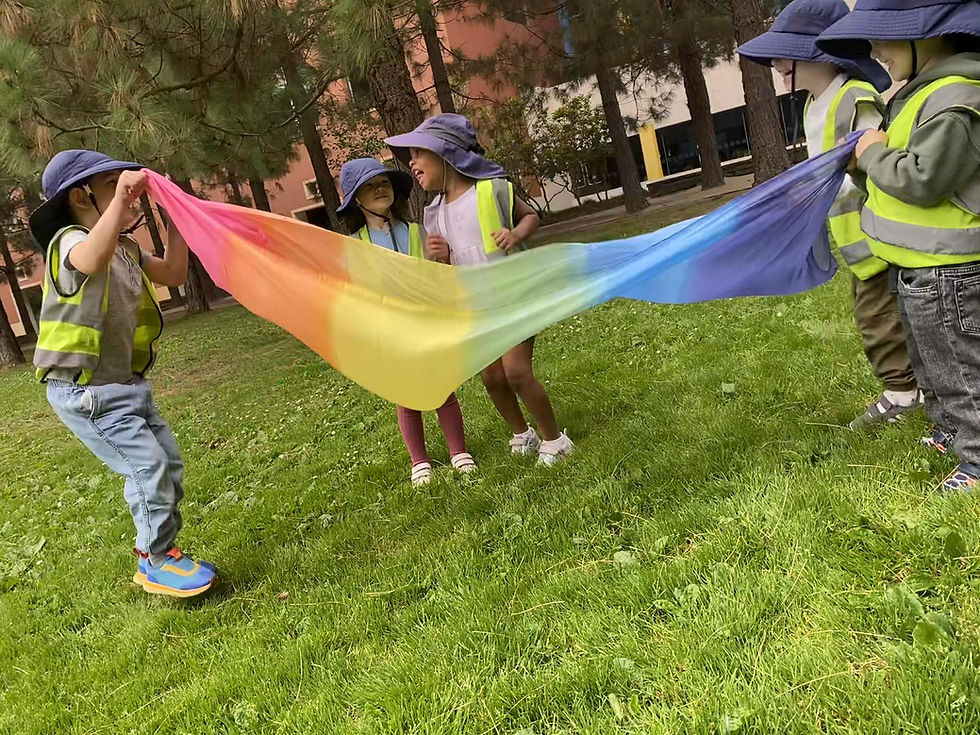
Loose parts exploration in action at Gwiggles Preschool
Examples of Loose Parts Learning in Action
A child uses stones and sticks to create a pattern, practicing math skills like counting and sequencing.
A group builds a pretend city with cardboard tubes and fabric, developing storytelling and social cooperation.
Children explore textures by sorting shells, pinecones, and buttons, enhancing sensory awareness.
A child experiments with balance by stacking different sized blocks, learning about gravity and stability.
These examples show how loose parts support multiple areas of development while keeping learning playful and child-centered.

Comments